
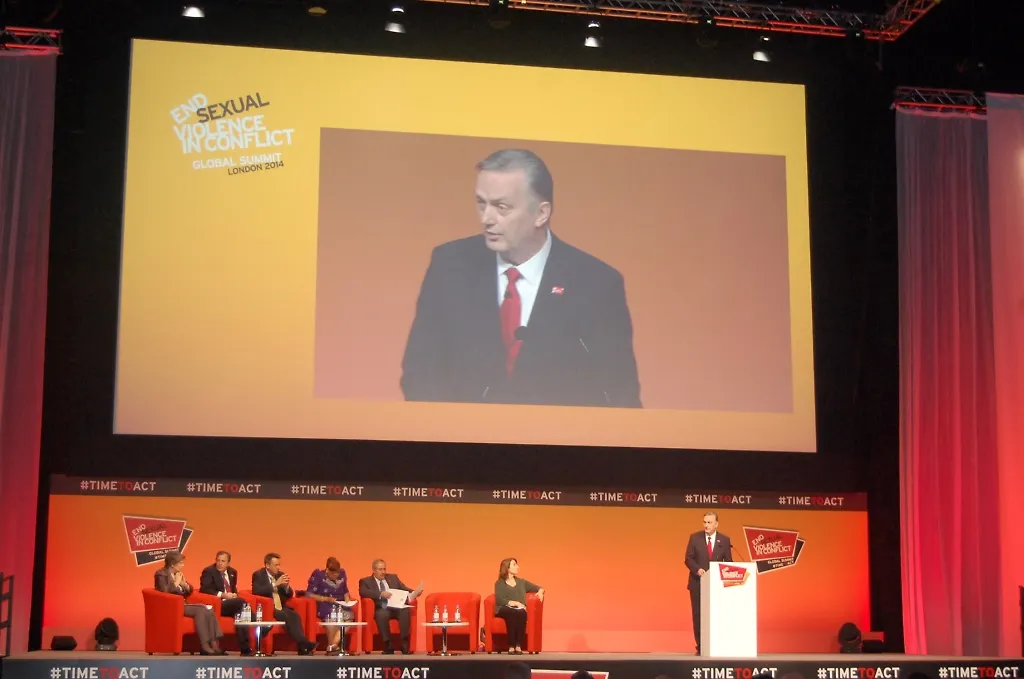





On 12 June 2014, Deputy Chairman of the Council of Ministers and Minister of Foreign Affairs of Bosnia and Herzegovina Dr. Zlatko Lagumdzija took part at the Global Summit to End Sexual Violence in Conflict which is being held in London from 10-13 June, co-chaired by Secretary of State for Foreign and Commonwealth Affairs of the United Kingdom William Hague and the Special Envoy for the UN High Commissioner for Refugees Angelina Jolie.
The Global Summit is the largest gathering on this issue ever convened with a view to creating irreversible momentum against sexual violence in conflict, providing support to all victims and taking practical actions in the future. A number of high-level delegations will take part in the Summit, victims of sexual violence, representatives of international organizations (UN, OSCE, etc), international and national legal institutions (ICTY and others), as well as representatives of the armed forces of different countries and NATO, non-governmental organizations, academic associations and media from around 100 countries in the world.
Dr. Lagumdzija was a panel speaker at the Ministerial session which was attended by Foreign Minister of Mexico José Antonio Meade Kuribreña, Foreign Minister of Jordan Nasser Judeh, President of International Red Cross Committee Peter Maurer, Minister of Gender and Development of Liberia Julia Duncan Cassell and the UNDP Administrator Helen Clark. A plenary session’s topic was: “Closing the impunity gap: building the architecture of prevention: serving and protecting people”. Vice President of the European Union and the High Commissioner for Foreign Affairs and Security Policy for the EU Catherine Ashton also participated in contributing to the discussion.
“I m coming from a country which experienced the worst horrors at the end of 20th century and so we must keep spreading the truth about it in order to ensure that such things never happen again to anyone, anywhere.
There are three main questions requiring a common answer. The first one is why we need to do everything to prevent sexual violence as war crime. The second one is how to strengthen prevention mechanisms and help victims to return to normal life. The third one is what we need to do in order to ensure that this crime never happen again.
First of all, we need to be aware of experiences that can teach us it has happened before and it could happen again to anyone, anywhere. A number of more than 40 000 cases of rape happened during the war in Bosnia and Herzegovina is an estimation that will never be fully accurate since 7-10% of victims are ready to report the crime. Injustice anywhere means that justice is in jeopardy everywhere.
Punishment and justice could be crucial and necessary factor, but punishment and justice alone are not enough for the prevention. If justice is truth in action, than denying a crime is injustice which is likely to happen again. That is why the fight for justice is important as much as the fight against denying a crime.
Care for victims and judging war criminals is important, but it must be supported by social, economic, political and individual activities. Justice will not be served until those who are unaffected are as determined as those who are.
We must be aware of the danger before it comes knocking on any other, not just our door.
Srebrenica did not come out of the blue. Today, after 21 year the B&H judiciary and the Office of the Prosecutor carried out the exhumation and identification of 395 victims from a mass grave Tomasica. In summer 1992, people in Prijedor were marked with a white ribbon because they are different and after only a couple of months they were killed in a mass grave.
So today we can not say we don’t know what will happen when people are getting to be physically or socially marked because they are different. We can not say we don’t understand what a final destination at the crossroad is when one direction leads towards segregation and the other one to common societies.
The experience teaches us that a crime must be punished and that we have an obligation to help a victim to return to normal life and that it is possible to prevent a crime. Together”, said Dr. Lagumdzija.
During his address Dr. Lagumdzija pointed to the importance of providing support to victims of sexual violence who feel ready to talk about what has happened to them and to admit their stories without being misjudged. Head of B&H diplomacy expressed his opinion that the role of the state can not and should not be limited only to pronouncement of sentence because it serves to close one chapter in victim’s life and the state and society in general must provide support to victims in order to help them to open another and normal chapters in their lives.
In that context, he pointed to the need of ensuring justice and the fight against the stigma of this social group, as well as to ensure victims’ recognition by society and regulation of their status.
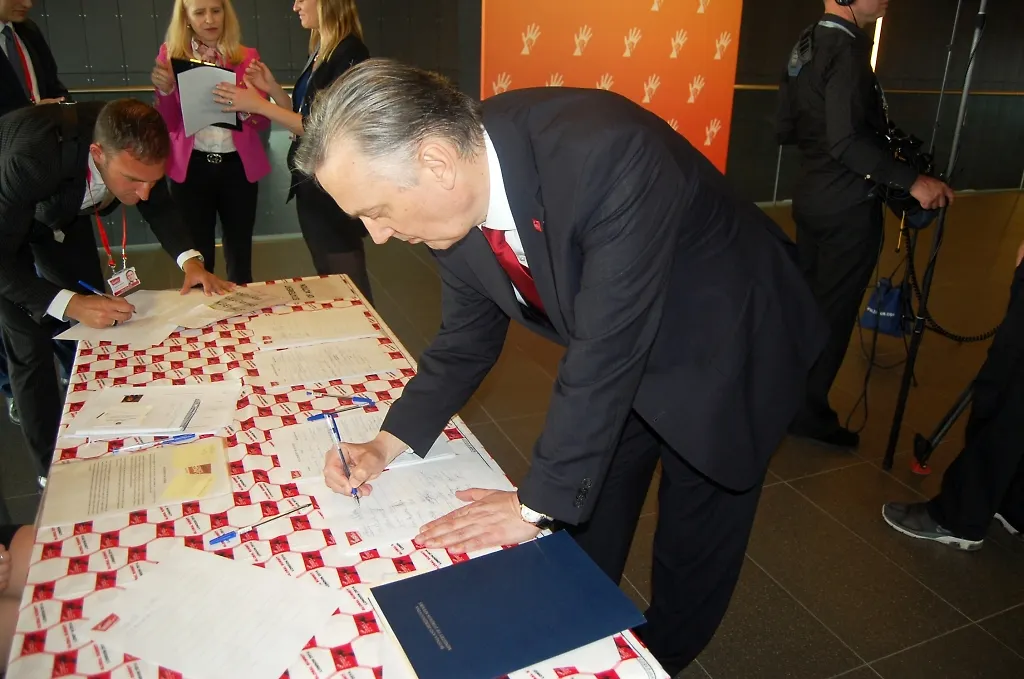
During his participation in the Summit, Dr. Lagumdzija signed on behalf of B&H “Statement of Action” which states an obligation that sexual violence can not represent a consequence of war or a lesser crime and that the prevention of sexual violence is a precondition for peace, security and sustainable development.